

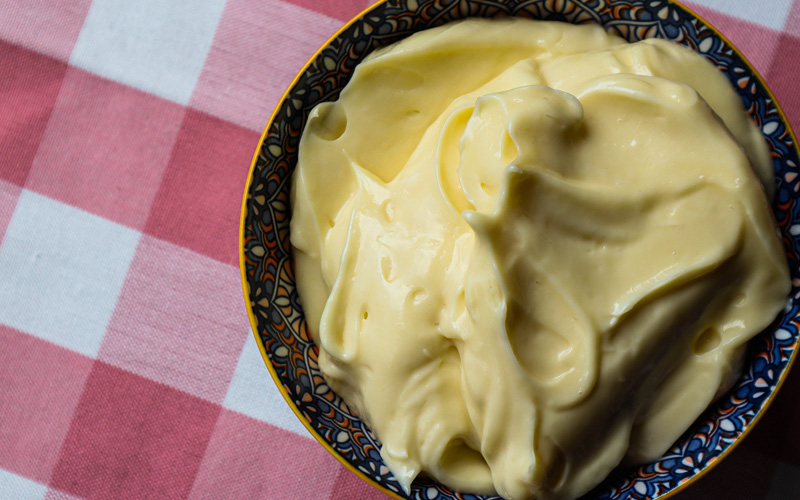
I don’t know about you lot, but my search for a decent mayonnaise recipe hasn’t gone altogether well. Most of the results I found online either involve a whole lot of laborious whisking, or the application of a fancy food processor or blending device. The problem with the latter, is that it will result in more of a sauce-like consistency than the globular stuff we’ve all come to know and love. In order to straddle the fine line of simplicity and authenticity, I have employed the use of an electric hand mixer to satisfy my lazy side without compromising the end product. As a result, the most difficult part of this Homemade Mayonnaise recipe is coming to terms with the sheer volume of oil contained it.
So, with that bombshell resounding around the mind-space, lets crack on with this exceedingly unhealthy condiment!

Light and Fluffy Homemade Mayonnaise
Equipment
- 1 Bowl
Ingredients
- 50g (1) Whole Egg
- 10g (1tsp) Dijon Mustard
- 240g (8½oz) Sunflower Oil
- 15g (1tbsp) White Vinegar
- 3g (½tsp) Salt
Instructions
- Gather your ingredients and mayonnaise making paraphernalia

- Place 1 Egg, 10g Dijon Mustard, and 3g Salt in a bowl wide enough to accommodate the hand mixer, and using the general whisk attachment, mix until fully combined
- Once sufficiently incorporated, keep the mixer running with one hand, and add the oil in very small increments with the other. Each time you add oil, ensure it has been completely consumed by the mixture before adding any more

- Keep slowly adding the oil, and once halfway through, you can begin pouring it a little more quickly, eventually ending up with a mixture that resembles cold, set custard

- Next up, we’ll perform some minor magic. Keeping the mixer running, add 15g of White Vinegar, and watch the mixture turn white and creamy before your very eyes, resulting in a very legitimate mayonnaise
- Finally, give the whole thing one last stir with a rubber spatula
- Celebrate your creation with a sandwich, or, if you’re from Belgium, some fried potato
Nutrition
Things to Consider when Making Homemade Mayonnaise
Eggs
If you peruse the interweb, you will find two walks of life, those that insist on whole eggs, and others that will only use the yolk. Having tried both, I have settled on the former, as the addition of egg white seems to give more volume and a creamier, lighter consistency. As this recipe dips into the controversial world of raw eggs, you should always use the freshest chicken embryos you can lay your hands on.
Oil
A good and tasty mayonnaise requires a light and generally flavourless oil. I’ve tried loads, and it took a while to settle on the sunflower variety. The biggest problem, however, came in the shape of an oily texture to the end result, meaning that quality plays a large part in the success of the recipe. As it stands, eager sandwich makers should steer clear of cheap and nasty oils in favour of their more expensive counterparts. I have used sunflower oil, but, legend has it that its ground nut and canola equivalents will yield similar results. Many recipes online list the use of Olive Oil in their ingredients, but when I tried, it resulted in a vile and almost inedible condiment. This likely means that you can potentially use Olive Oil to make mayonnaise, but the results will depend heavily on the brand, and the variety of Olives present.
Right, now that Mayonnaise is out of the way, knock up a loaf of bread and go make yourself a sandwich to celebrate!


Leave a Reply